
Greensboro Previous Residents by Era
A backward address trail works best when each source serves a separate purpose. Deeds establish a legal transfer history. City directories and census schedules add household-era context. Maps and permits help establish whether the structure or street label existed. For previous residents, begin with the source closest to the era in question, then use at least one independent record to test the connection.
| Source | Years It Covers | Where Held | What It Shows |
|---|---|---|---|
| Guilford deed/index system | County advertises online records back to 1771; exact image/index cutoff by type is unverified | Register of Deeds, RDLxWeb, books, microfilm, Archives | Conveyances, legal descriptions, liens, plats, and related parties |
| Greensboro city directories | 1879/80–1981/82 in listed runs; digitized core 1884–1963; later holdings listed to 2007 | GPL, GHM, UNCG, Digital Greensboro, Internet Archive | Published occupants, businesses, addresses, and occupations |
| Federal census | 1790–1950 released; 1890 destroyed | NARA, library databases, FamilySearch | Household composition, age, relationship, birthplace, and period fields |
| Sanborn maps | 1886, 1896, 1902, 1907, 1919, and later cataloged sheets | Library of Congress and local collections | Building footprint, use, street number, lot, and physical context |
| City archives and permits | Post-2021 electronic process is distinguished; older archive start year is unverified | Greensboro Development Services and Records Management | Construction, inspection, plans, aerials, and tax-map evidence |
The current property card is the starting point for a deed trail. The directory and census routes are stronger when the goal is who lived here before, because ownership and occupancy are not the same fact.
Freeze the Current Greensboro Parcel
Before searching older records, save the current NCPTS property-card details: REID, PIN, exact situs address, property description, acreage, plat or book reference, deed book/page/date, owner, mailing address, and map. The Guilford Real Property Listing system accepts parcel number, owner name, or street address. Its detailed card can show the legal description, transfers, sales, values, buildings, notes, and tax-linked fields.
Capture both the situs address and owner mailing address. The inspected 800 Arlington card showed a Greensboro property with a Durham mailing address, a useful reminder that a mailing field is not proof of residence. Record the property identifiers before a name search so later deed entries can be tested against the same parcel rather than a similar street number.
Greensboro Previous Residents and RDLxWeb
Use the Guilford Register of Deeds RDLxWeb search as the online bridge from a current deed reference to earlier transactions. The county says its online records reach back to 1771. The live JavaScript form did not expose all of its search fields during the research inspection, so the claim should not be read as a promise that every older image, index field, or instrument type is visible online.
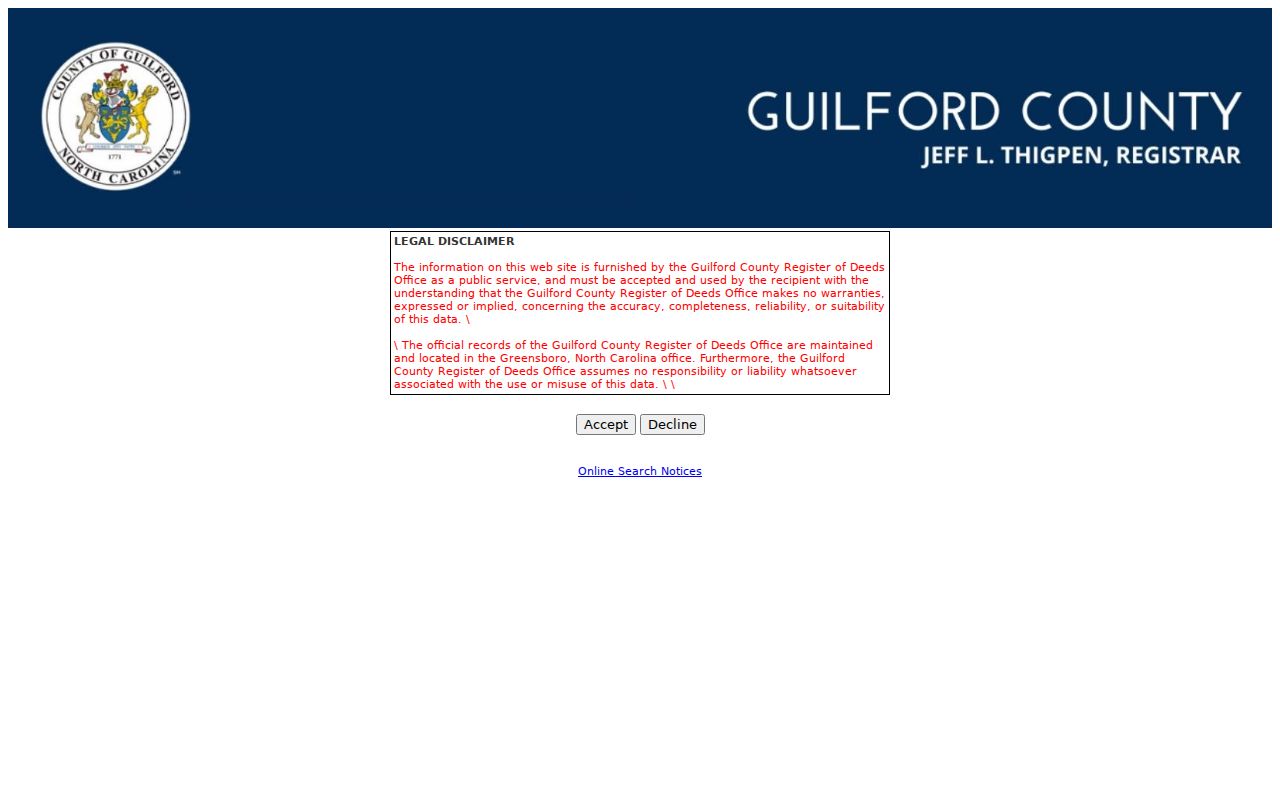
The search landing view is a starting point, not the final evidence. When an image or older entry is unavailable, use the Register’s Greensboro counter, books or microfilm, a phone or written request, the library deed guide, or the State Archives as the documented fallback chain.
Guilford Deed Chains for Greensboro Previous Residents
Open the current purchase deed from the property card and identify the present owner as grantee and the seller as grantor. Then search that seller as a grantee in an older transaction. The earlier deed identifies the seller from that transfer, and the process repeats. Carry the legal description, lot or block, plat reference, acreage, adjoining tracts, book/page, and document number at every step. A parcel can be divided, recombined, or described without a street address.
- Save the current deed date, book/page, legal description, and every linked instrument from the property card.
- Locate the current purchase deed in the Register index and record grantor, grantee, instrument type, recording date, and consideration or revenue-stamp information where shown.
- Search the seller as a grantee in an earlier transaction, then compare the legal description to the parcel already saved.
- Repeat through each verified conveyance. Stop and resolve a tract split, plat, or metes-and-bounds change before joining names across it.
- Move to microfilm, manuscript volumes, the Register office, or Archives copies when the web route lacks the necessary entry or image.
- Grantor
- The person or entity transferring an interest in the deed being read.
- Grantee
- The person or entity receiving that interest. A prior owner often appears as grantee in the deed by which they acquired it.
- Chain of title
- The sequence of connected conveyances for the same land. It is verified with the parcel description, not name order alone.
- Legal description
- The lot, plat, metes-and-bounds, acreage, or tract wording that identifies land when a street address changes or disappears.
Greensboro Previous Residents Need Legal Descriptions
Street labels can change with annexation, municipal geography, road names, or numbering practices. Old directories may give a corner, “S.G.” for South Greensboro, a neighborhood, or a road instead of today’s address. Greensboro Planning tracks annexations and street-name changes and retains PDF maps with legal descriptions. Guilford’s Master Road Name database is shared across municipalities, Emergency Services, Guilford Metro 9-1-1, and developers, while address authority is split among local governments.
Use a plat or map to connect a subdivision lot/block to a current address. For a metes-and-bounds tract, compare acreage, boundary calls, adjoining owners, parcel geometry, and the deed book/page. The library’s deed guide recommends surname followed by given name, then reading conveyance, consideration or acreage, and book/page columns before turning to microfilm or manuscript pages. Note: Old paper and ink can be degraded, so a difficult original may need an in-person or archive check.
Greensboro Previous Residents in Directories and Census
Deeds describe a legal interest, not every household. To locate past residents, use the published directory years as checkpoints, then pair each strong address-era match with the released census schedules. Greensboro directories run from 1879/80 through listed runs ending in 1981/82, with a digitized core from 1884 to 1963 and later holdings into 2007. The full collection detail is available through the Greensboro city directories route.
Follow the address and the name, allowing for initials, a widow notation, boarder status, a corner location, or a new street number. The 1890 census was destroyed, so the 1887 directory, newspapers, deeds, and the next released census can serve as key bridge evidence. The latest released federal census in the research is 1950 under the 72-year rule.
- Find the closest available directory entry and preserve its exact address notation, occupation, and edition year.
- Search the next older and newer directory runs, noting a move, missing name, or changed role.
- Pair the best directory years with the appropriate released census to compare household members and address-era clues.
- Use a burial, obituary, probate, or later deed record to test whether an apparent disappearance was a death, move, or property transfer.
Greensboro Previous Residents and Building Evidence
Sanborn maps establish physical context before they identify a person. The Library of Congress 1919 Greensboro Sanborn item has 47 sheets. Such maps can show building size, materials, use, streets, property boundaries, house or block numbers, and sometimes other property clues. They can establish that a building or lot configuration existed in a period, but they do not prove who occupied it.
Pair a Sanborn sheet with the deed’s plat reference and a directory year. Greensboro Records Management also identifies historical tax maps, aerial photography, infrastructure records, construction plans, and GIS data. Ask for a targeted address, date range, permit, plan, inspection, or project record. A permit records agency activity at an address; it is not a resident list.
Greensboro Past Resident Record Access
The Register of Deeds is at 201 W. Market Street in Greensboro, with vital records on the first floor and real-estate and recording services on the second. The county lists Greensboro and High Point office hours as Monday through Friday, 8 a.m. to 5 p.m. Its main phone is 336-641-7556, and the Greensboro vital-records line is 336-641-7730. The counter is the strongest next step when an older entry, book image, or deed index detail does not appear in RDLxWeb.
The library’s Guide to Using Guilford County Deeds gives the practical fallback: search surname before given name, read conveyance and consideration or acreage columns, note the book designation/page, and then use the associated microfilm reel or manuscript volume. A targeted request should identify the book/page, instrument, person, parcel, or date range. The county office, library, and State Archives each fill a different gap, so a past-resident trail should note which custodian supplied each document.
The Register also says online services may be slow. Calling, emailing, mailing a focused request, or using the counter can be more practical than repeating an incomplete online search. Official records remain maintained at the Greensboro office, even when an online route is available.
Greensboro Previous Resident Trail Endpoints
When a name vanishes from an address trail, test the event with the Greensboro Public Library’s obituary and local-history routes, the municipal Burial Index, newspapers, and Clerk of Superior Court estate or probate files. Green Hill has entries as early as 1840, Maplewood as early as 1900, and Forest Lawn as early as 1915 in the city index. Union Cemetery is maintained separately. Probate can identify heirs, an executor or administrator, dates, notices, and later estate conveyances, although some files can be sealed or redacted.
Lawful use. Use Greensboro previous-resident research for house history, family history, estate questions, or personal curiosity. Do not use a public record to stalk, threaten, harass, or expose a living person.
Previous residents are best documented as an address-era trail, not a single database result. Preserve the source, date, page or book reference, and the feature that ties each person to the same parcel or household.